
Body: The TL;DR (For the Parent with Brain Fog)
Grab your favorite oversized mug of coffee and let us chat about the ultimate toddler tier rogue. If you have ever played a D&D campaign with a chaotic neutral player who hoards items and avoids fetch quests, you already understand the vibe of this bird. This little feathered troublemaker brings the iconic German children's book series "Alles vermurkst!" (Everything Messed Up!) into the audio ecosystem, packing a solid 49 minute runtime of pure episodic entertainment.
- The Hardware Meta: As an early wave catalog drop, this launch proved that the platform could successfully run serialized, episodic literature instead of just leaning on ninety minute movie summaries.
- Physical Ergonomics: Forget fragile bird legs that break if you breathe on them. The industrial design seats the raven flat on an integrated purple box base, pinning the center of gravity low to the floor for maximum magnetic bed stability.
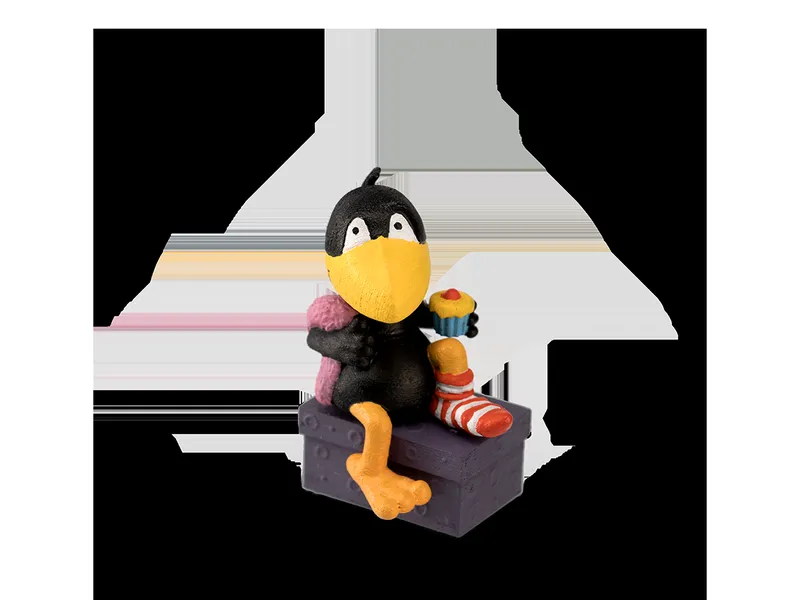
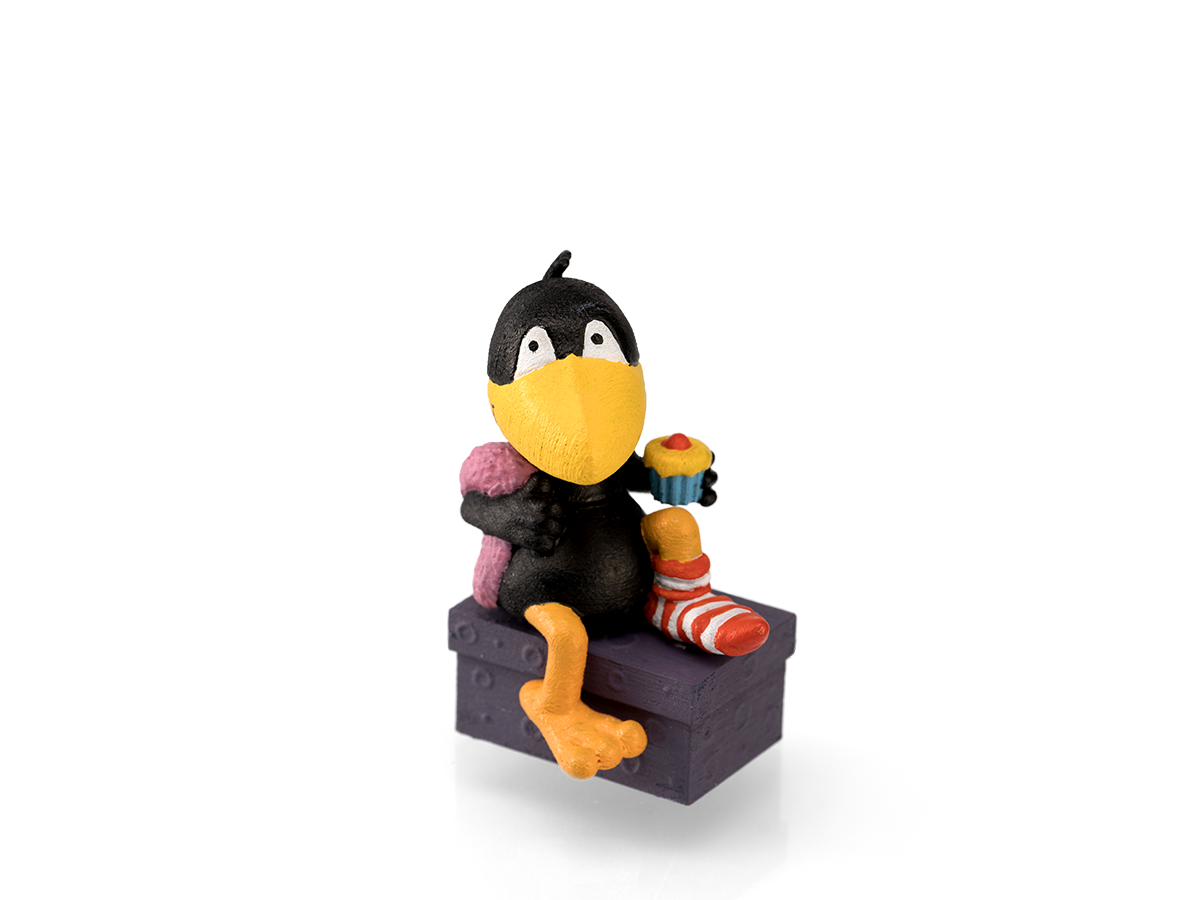
(Take a close look at the figure design above. Notice how the engineers completely eliminated fragile ankle joints by parking the character on that chunky purple box. The broad footprint maximizes contact with the audio player, ensuring a toddler bump won't break the magnetic connection.)
The Quest Log
- From Paper to Silicon: The Mechanics of Narrative Conversion
- Mass Distribution: Solving the Avian Physics Dilemma
- The Psychology of the Imperfect Hero in Early Ecosystems
From Paper to Silicon: The Mechanics of Narrative Conversion
Porting a highly visual picture book into an audio only physical format is like trying to translate a complex PC game to a retro handheld console without losing the core gameplay loop. The original books by author Nele Moost and illustrator Annet Rudolph rely heavily on the comedic tension between the printed text and the chaotic illustrations. When you read the book, the visual punchlines do the heavy lifting. To flip this into an autonomous audio figure without losing its identity, the sound production squad had to translate silent visual gags into distinct acoustic signals.
The audio adaptation, anchored by an incredible voice performance, handles this conversion perfectly via clever spatial audio design and snappy pacing. The tracks function just like a classic episodic sitcom where each story is a self contained trial and error cycle.
- The Narrative Conversion Loop Workflow
- Phase 1: Crisis Generation
- The character triggers a major structural or social mess through raw, impulse driven greed.
- Phase 2: The Rogue Shortcut
- Instead of listening to advice, he invents a ridiculous workaround to bypass any real work.
- Phase 3: The Spectacular Wipeout
- The lazy shortcut blows up magnificently, causing an absolute disaster on the map.
- Phase 4: Co-Op Party Stabilization
- He relies on his guild (his forest animal friends) to step in, help him rebuild, and restore balance to the ecosystem.
This short format fits the working memory limits of younger listeners perfectly. Instead of a massive, continuous theatrical arc that demands intense focus, these bite sized chunks offer great natural entry and exit points. By transforming a page turning book into a screen free playback toy, the brand proved that literary gems can hook kids just as well as giant movie franchises. Rhythmic cues, distinct musical transitions, and ambient sound effects let little ears track the movement of the characters without a screen in sight. This successfully showed that the platform could easily double as a viable digital library for classic preschool and school literature, scaling the brand value way past standard cinematic tie ins.
Side Quest: Low Profile Sculpt Stabilization and Maker Physics
Let us look at this figurine like a true DIY maker or a 3D printing hobbyist running a model through slicing software. If you were to drop a traditional bipedal bird figure into Cura or PrusaSlicer, you would instantly throw a red flag. Spindly avian legs are a massive structural failure point in toy manufacturing. They offer terrible surface area contact with the print bed, build up crazy stress concentration points at the ankles, and leave you with a highly elevated center of mass.
In a chaotic toddler ecosystem, a tall bird figure acts like a pendulum. The second a child bumps the table, the leverage generated by that top heavy sculpt would snap the neodymium magnet connection to the playback cube, causing immediate audio drops and an inevitable toddler meltdown.
- The Avian Physics Vulnerability Diagram
- Traditional Bipedal Bird Sculpt (High Risk)
- Small build plate surface area (thin feet)
- High center of mass (top heavy torso)
- Pendulum effect (high torque when bumped, breaking magnetic connection)
- Modified Seated Raven Sculpt (Low Risk / Model 01-0035)
- Integrated permanent raft (broad purple box base)
- Ultra low center of gravity (magnet housed in the lowest millimeter of the base)
- High drop resistance (compact profile that survives playground environments)
The industrial design team bypassed this physics trap by completely reworking the character geometry. Instead of forcing our favorite raven to stand on toothpick legs, they parked his backside right onto a geometric block styled as a purple box. This choice acts as a permanent, built in raft, giving maximum surface area contact to stick firmly onto the rubberized top of the speaker cube.
The internal neodymium magnet lives deep inside this dense purple base, dragging the center of gravity down to the lowest possible millimeter. The extra details, like the blue cupcake with its red icing topper and the pink cloth tucked under his wing, add a little asymmetrical visual weight. However, because the core mass is pinned inside that broad, flat seat, those stylistic flairs do not mess with the mechanical stability of the figure. His left leg dangles casually over the front edge to create depth, while his right leg stays safely tucked away inside a striped sock. It is a fantastic example of turning complex character anatomy into a rugged, drop resistant piece of hardware built to survive real world playground drops.
The Anti-Hero Archetype as a Collection Driver
To grasp why this specific character choice was a masterstroke for the platform, let us look at the group dynamics through a classic tabletop role playing lens. Most early childhood media leans hard into the lawful good paladin archetype, characters who always model immaculate behavior, follow every rule, and solve problems with a polite smile. Socke completely breaks the mold by rolling out as a pure chaotic neutral rogue. He is greedy, boastful, loud, impatient, and constantly trips over his own mistakes. He wants his cake and his favorite comfort cloth, and he wants them ten minutes ago.
This specific behavior profile makes him an incredible collection driver. Kids do not just listen to a sterile moral lesson here; they see their own loud, unregulated toddler impulses mirrored back to them in a completely safe, non punitive narrative world. For parents and educators, this offers a brilliant pedagogical setup. The stories open up a natural space to talk about boundaries, failing, and making things right without the heavy handed lecturing of traditional fables.
When this little rogue joined the early lineup, it sent a clear message to the consumer market. This audio platform was not just a repository for pristine fairy tales or sanitized corporate movie summaries. It was a home for complex, contemporary children's literature that could challenge, amuse, and spark real family conversations all at once. This psychological match supercharged the collection velocity during the early days of the platform. When a child connects with a character's hilarious flaws, emotional retention spikes. This naturally prompts families to track down adjacent episodic updates and cool character variants, cementing the toy to audio collection habit that forms the backbone of the entire hardware ecosystem.
The Exit Interview
- Golden Nugget: This launch proved that adapting episodic picture books with flawed, high personality characters was a highly viable strategy for creating deep collection loops and incredibly sturdy physical figure designs.
- Rapid Fire FAQ:
- Who is the voice actor for the raven in this German audio play? The character is voiced by Oliver Rohrbeck, globally famous among audio nerds for his iconic work as Justus Jonas in the legendary German audio drama series Die drei ??? (The Three Investigators).
- Does this specific figure layout tip over easily during playback? No. The design completely dodges thin legs by seating the raven character directly on a wide, flat purple box base, creating an incredibly low center of gravity and excellent magnetic stability.
- Next Step: If your current shelf is saturated with predictable, hyper polished movie summaries, add an episodic character with a chaotic neutral personality profile to your collection to see how a more dynamic narrative structure affects your child's independent listening stamina.
Disclaimer: Our goal is absolute technical accuracy, but we are human and bugs happen in the code. We never intend to offend, insult, or attack anyone with our content. If you spot a bad data point or a broken fact, please report the post so we can patch it immediately. We are just a three-person squad running this site, managing the daily blog, and prepping the new forums. If you appreciate the grind and want to help us keep the lights on, consider buying us a coffee. It keeps our caffeine levels critical and the servers running.
Reference Log
- Official Tonies Product Details & Tracklist: Tonies Germany Catalog
- Manufacturer Specifications & Model 01-0035 Identifier: Vedes Retail Database
- Audio Play Runtime & Cast Verification: Toys for Fun Product Page
- Retail Pricing Trends & Target Age Recommendations: Idealo Price Comparison Guide