The TL;DR The Origin
Pour yourself a giant mug of coffee, find a hiding spot from the kids, and let's have a quick chat about screen-free audio history. Remember when the Toniebox first hit the scene in Germany back in September 2016? It arrived with a very specific launch lineup of 14 little figures. Tucked right into that first wave was a quirky little green guy known as the Olchi Detective, or Die Olchi-Detektive: Das Erbe der Piraten. This launch decision was a huge strategic pivot for the entire platform. While the very first figures focused on simple nursery songs and quick baby chuckles, this specific little detective proved the platform could pull off a massive expanded universe. Doubling down on the exact same character family so early in the game confirmed that the hardware was built to handle complex character variants and deeper stories from day one.
Let's take a look at how this little guy is constructed. He isn't just a basic plastic toy; he is engineered to sit low and tight on his magnet base.
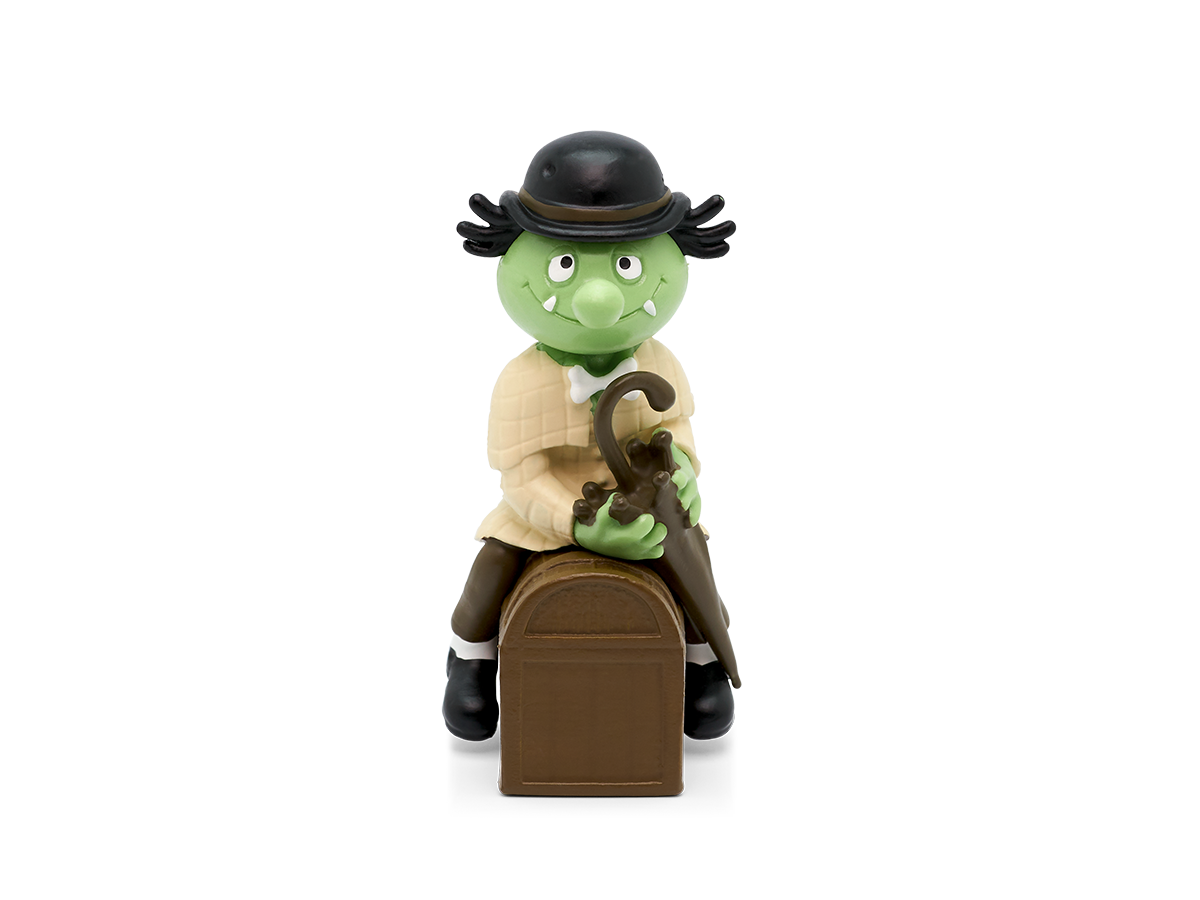
When you look at the visual, you can see the unique green character sporting a tiny black bowler hat, a beige plaid detective coat, and a crisp white bow tie. He is clutching a tiny umbrella while perched comfortably on top of a sturdy brown treasure chest. This clever choice keeps the center of gravity incredibly low so it won't easily tip over when little hands inevitably bump into the box.
The First Spin-Off Anchor
If you want to understand how the creators planned their early launch wave, think of it like rolling your very first Dungeons and Dragons party. You cannot just fill a group with five rogue thieves; you need a balanced party of distinct classes to survive the campaign. The initial batch of 14 figures formed a clever tactical roadmap. The lineup kicked off with absolute classic historical heavy-hitters: the reading lion mascot, the classic chaotic Olchis who love hanging out in trash, and the nostalgic stories of Janosch.
Dropping an advanced detective spin-off right after introducing the baseline characters was a massive gamble. Instead of rolling out a totally unproven new franchise, they decided to expand an existing character family. It brought sequel culture to wireless audio toys before the market was even established. It signaled that this system would operate as a full-scale content ecosystem with deep catalog choices rather than a minor collection of standalone toys.
Here is exactly how that early content pipeline looked:
- Phase 1: The Core Party Selection
- Ground the platform by launching the standard reading lion mascot.
- Roll out familiar literary worlds like Janosch and the baseline Olchis to grab immediate attention.
- Phase 2: The Sequel Expansion Pack
- Deploy a specialized spin-off figure immediately to see if families want expanded lore.
- Shift focus toward longer narrative arcs instead of basic one-and-done toddler stories.
- Phase 3: Deep Custom Collection Habits
- Transition young listeners from passive background noises to active plot tracking.
- Introduce collectible character variants to build a dedicated, cross-generational audio library.
Audio Engineering: Tuning Runtimes for Older Kids
From a technical audio production standpoint, this mystery release was a brilliant demographic pivot. The standard introductory figures were designed primarily for toddlers, relying on short playtimes and simple situational jokes. Think of those as the low-level starting zones where you smash tiny level-one targets.
This pirate mystery set its sights on the older kid crowd, specifically ages six and up. The story follows a complex pirate inheritance mystery across a much longer 42-minute runtime. For the sound engineering crew, this meant building a far more complex multi-character tracking layout. The dialogue is remarkably dense, the plot asks kids to use actual deductive logic, and the audio mixing ensures that young listeners can pick up clues buried in the soundscapes without dropping the story thread.
Haptics and Physics: The Custom Treasure Chest Sculpt
Every single one of these figurines operates as a physical user interface, and this release brought a crucial production choice. To prevent little ones from getting confused on the shelf, the design team skipped lazy paint swaps and went all in on a fully bespoke, custom-molded figure.
As we saw in the image above, the figure shows our green friend rocking a black bowler hat, a beige plaid detective coat, and a white bow tie while holding an umbrella and sitting on top of a brown treasure chest. This specific layout keeps the center of mass remarkably low and steady against the magnetic base. It provides instant visual and tactile feedback, telling a child right away that this is a specialized mystery edition instead of the standard comedy figure.
The "Specialized Sub-Class" Meta
Why did the developers commit multiple launch slots to the exact same character family? It all comes down to platform density and smart licensing. Back in 2016, the company's partnership with Oetinger Verlag was their absolute highest-tier legendary loot. Reusing known characters kept manufacturing friction low and instantly gave the catalog a unified, professional look.
In video game terms, this quietly introduced kids to the concept of character classes. A child learns that their favorite character isn't locked into just one role. You can have the base model, or you can choose to swap your character's stats into a specialized detective sub-class. It is a brilliant strategy that sparked the intense collecting habits that transformed an unproven toy line into a massive audio empire.
The Exit Interview
The Golden Nugget: The early detective release proved that the platform could successfully deploy specialized character spin-offs and custom sculpts, successfully transitioning young listeners from simple gags to complex, 42-minute procedural mysteries.
Rapid Fire FAQs
- How does the detective release differ from the standard introductory version?
- Think of the standard version as a short cartoon pilot filled with quick, silly comedy for tiny tots. The detective version is more like a feature film, serving up a 42-minute structured mystery with a fun pirate theme that is perfect for kids aged six and up.
- Is the physical figure completely unique?
- Yes, it is. This is a completely unique physical mold that shows the character decked out in full detective gear while sitting on a treasure chest. It does not reuse the standing poses from the older figures.
Next Step: Take a look at your current collection shelf. If it is filled entirely with standard movie adaptations, add a specialized spin-off figure like this detective variant. Introducing genre shifts and procedural mysteries is an excellent way to expand your child's tracking abilities and build longer attention spans.
Reference Log
- Tonies Catalog Archive: https://tonies.com/de-de/tonies/die-olchi-detektive/das-erbe-der-piraten/
- Oetinger Verlag Book Profile: https://www.oetinger.de/buch/die-olchi-detektive-das-erbe-der-piraten/9783789104039
- Boxine GmbH Historical Launch Registry (September 2016 Ecosystem Data): https://gt-blog.de/all-tonies-overview/
Disclaimer:Our goal is absolute technical accuracy, but we are human and bugs happen in the code. We never intend to offend, insult, or attack anyone with our content. If you spot a bad data point or a broken fact, please report the post so we can patch it immediately. We are just a three-person squad running this site, managing the daily blog, and prepping the new forums. If you appreciate the grind and want to help us keep the lights on, consider buying us a coffee. It keeps our caffeine levels critical and the servers running.