
The TL;DR (For the Retro Audio Hoarder)
- The Heritage Blueprint: Model 01-0008 is an absolute cornerstone from the early days of the German launch. It takes author Paul Maar's legendary 1980s books and turns them into drop-resistant plastic loaded with NFC tech.
- The Acoustic Balancing Act: Pulled straight from the vintage 1982 studio tapes, this classic track needed serious sound leveling. Without some careful engineering, the main character's high-pitched rhyming outbursts would completely wreck the tiny built-in speaker.
- The Secondary Meta: Now sitting comfortably in retirement, this exact toy has transformed from a chaotic playroom staple into a holy grail item on secondary collector boards.
The Quest Log
- The Saturday Rule: Dissecting the calendar-based rhyming puzzle of Paul Maar's world and why it became a total core memory for early tech adopters.
- Audio Architecture: Polishing up 1982 analog tapes, leveling out wild vocal spikes, and scrubbing off ancient cassette hiss for a crisp modern experience.
- The Vault Economy: A quick look at why this retired figure's price is skyrocketing on the secondhand collector market.
- The Anatomy of a Wish: The toy design engineering that keeps a top-heavy creature balanced on top of a speaker box.
The Saturday Rule
If you have ever spent a weekend running a high-stakes Dungeons and Dragons campaign, you know a magical system is only as good as its restrictions. Author Paul Maar understood this perfectly. He built a linguistic logic puzzle for his world that works exactly like a complex dungeon layout. The entire plot of Am Samstag kam das Sams zurück (On Saturday the Sams Returned) hangs on a week-long calendar streak. For the main character, Mr. Taschenbier, getting his chaotic, wish-granting buddy to spawn requires a flawless chain of environmental and social triggers.
Think of it as a daily checklist for an epic quest:
- Sunday must serve up clear, bright sunshine.
- Monday requires a casual drop-in from his buddy, Mr. Mon.
- Tuesday means he has to actually survive his workday (Dienst).
- Wednesday needs a mid-week calendar marker (Mittwoch).
- Thursday has to strike with a massive thunderstorm (Donnerstag).
- Friday demands an early escape from his corporate shift (Freitag).
- Saturday finally clears the path for the creature (Samstag) to arrive.
This rhythmic loop is exactly why the story maps beautifully onto a screen-free audio box. Toddlers track their daily lives through intense repetition, behaving a lot like a software script or a predictable macro. By including this classic tale in the launch lineup, the creators gave millennial parents a nostalgic loop they already knew by heart from their own childhood cassette collections. It was the perfect proof of concept for the whole system, showing how long-form literature could become a tactile object that tiny hands can control without calling for parental IT support. The writing relies heavily on rapid-fire puns and wordplay, which trains little ears to listen closely instead of zoning out in front of a glowing screen.
Audio Architecture
When you resurrect a master recording tracked at Sinus-Studio Berlin back in 1982, you are dealing with a very specific vintage audio profile. The original tracks were captured on magnetic tape, which gives the voices a lovely, warm analog hug, but it also leaves behind a persistent high-frequency hiss when you port it over to a digital file. The ultimate engineering boss fight here was optimizing that audio for a modest three-watt mono speaker buried inside a padded, foam-lined box. The legendary actor Peter Schiff reads Mr. Taschenbier with a cozy, slightly gravelly mid-range tone. Meanwhile, the title character regularly bursts into ear-piecing, high-frequency poems, screams, and musical numbers.
Here is exactly how the engineering team processed that vintage analog signal for modern ears:
- Audio Mastering Workflow
- Raw 1982 Analog Master
- The original studio tape containing the warm performance along with historic cassette noise.
- Digital Hiss Pass-Filter
- A targeted sweep to filter out high-frequency fuzz without muddying the vocal tracks.
- Dynamic Range Compression
- Leveling the playing field by dampening explosive vocal outbursts and boosting quiet whispers.
- Safe 3-Watt Mono Export
- The final balanced mix optimized for small kid-friendly speakers without causing structural distortion.
Without that digital tuning, the extreme difference in volume would cause immediate speaker blowout. If a kid decides to spin the physical volume ears to maximum capacity during a quiet chat, a sudden jump to a loud rhyme would stress the internal speaker cone and scare your toddler right out of their nap. To avoid this, the audio file went through rigorous dynamic range compression. The crew leveled out the volume spikes, pinning the loud screams beneath a safe ceiling while lifting the lower tones. The result is a sparkling clean playback that keeps all the theatrical magic of the original acting without any digital grating or background fuzz.
Side Quest: The Vault Economy
In the world of trading card games or tabletop miniature collecting, certain items eventually hit the retired list when licensing contracts shift or factory molds wear out. This specific figure has officially crossed the threshold into vaulted status, meaning the automated assembly lines have gone completely dark.
Because this little guy is an absolute core memory for European families, shutting down the factory triggered an immediate supply crash on the secondary market. Parents looking to complete their vintage collection or replace a lost figurine now have to scour competitor forums and online auction houses. Prices for a mint-condition figure often double the original retail price, turning a basic piece of molded plastic into a genuine collector asset. It highlights a fascinating double-layer value system. These figures are not just digital licensing keys to a cloud audio server; they are real toys that hold value based on paint preservation, sculpt condition, and historical scarcity.
The Anatomy of a Wish
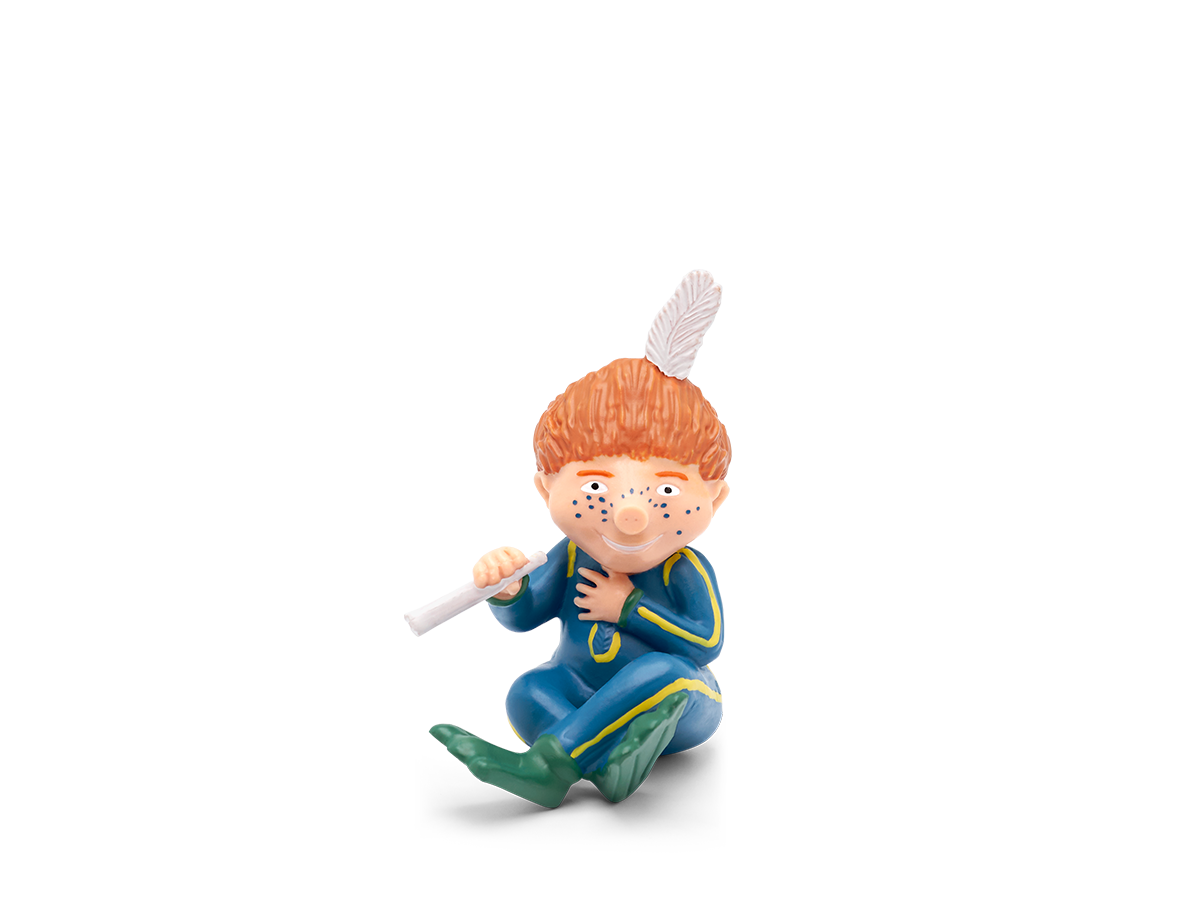
From a toy design standpoint, this figure is a beautiful lesson in real-world physics. The sculpt captures the creature sitting completely cross-legged, a design choice that intelligently drops its center of mass. When a kid drops the figure onto the top of the speaker box, the magnet buried inside the base needs to maintain a rock-solid connection with the near-field communication reader hidden inside. If a figure is sculpted too tall or top-heavy, a random bump to the playroom table creates a lever action, tipping the character over and pausing the track like a bad internet lag spike during a dungeon boss.
The material distribution inside the toy mold is meticulously engineered:
- Figurine Material Architecture
- Upper Elements (Spiky Red Hair and Extended White Feather)
- Material: Light, low-density polymer to keep the top weight minimal.
- Structural Core (Blue Diving Suit)
- Material: Standard structural compound connecting the upper and lower halves.
- Stable Base (Cross-Legged Sitting Position)
- Material: Heavy, high-density elastomer to anchor the figure to the speaker.
- Component: High-strength internal magnet embedded in the bottom surface.
To balance out the wild geometry of that spiky red hair and the tall white feather stretching upward, the designers used varying material densities right inside the injection mold. The bottom half of the blue diving suit uses dense polymers, while the top elements use a lighter, more pliable compound. Even the face paint requires strict quality checks, particularly the placement of those iconic blue freckles. According to the book, these spots are a literal visual mana bar for wishes; whenever a wish is granted, a freckle vanishes from its skin.
The figure holds a tightly rolled white paper scroll in both hands. In the story, this scroll is the actual blueprint for the wish machine, which drives the entire plot of the second book. By locking this specific story moment into plastic, the toy transforms into a wonderful interactive prop. Kids can act out scenes in real life while the vintage audio drama plays along in the background.
The Exit Interview
- Golden Nugget: Cleaning up classic 1980s children's media requires heavy dynamic compression so that loud, energetic character voices do not distort small mono speakers or startle little listeners.
- Rapid Fire FAQ:
- Why does the character hold a scroll? The scroll contains the instruction rules for building the mythical wish machine, the central focus of the entire second book.
- Can this figure be used on any regional player? Yes, the physical tech works perfectly on global hardware, though the audio file will play entirely in its original German recording.
- What happens if the figure is dropped? The flexible thermoplastic material is built like a tank, shielding the internal identity chip from heavy drops or rough play.
- Next Step: Take a quick look at your current shelves for early production toys. If you own classic German audio figures, take a second to clean any dust or playroom debris off the base magnets to ensure a perfect data connection during your next listening session.
Disclaimer: Our goal is absolute technical accuracy, but we are human and bugs happen in the code. We never intend to offend, insult, or attack anyone with our content. If you spot a bad data point or a broken fact, please report the post so we can patch it immediately. We are just a three-person squad running this site, managing the daily blog, and prepping the new forums. If you appreciate the grind and want to help us keep the lights on, consider buying us a coffee. It keeps our caffeine levels critical and the servers running.
Reference Log
- Official Tonies Das Sams Product Page
- Slotcar-Rennbahn Model 01-0008 Retail Profile
- Discogs 1982 Cassette Mastering Credits