
The TL;DR (For the Caffeine-Fueled Sandbox Architect)
- The Origin: Dropped right alongside high-fantasy titans during the first German launch wave, this specific figurine (SKU #01-0011) proved that the entire ecosystem could thrive on quiet, real-world slice-of-life storytelling instead of just relying on epic wizard spells.
- The Audio Payload: A clean 43-minute runtime is split between two audio plays, tracking classic toddler developmental milestones using gentle, real-world sound design.
- The Strategy: This launch allowed the platform to level up past old-school analog media nostalgia, rolling out a repeatable, low-risk roadmap built entirely around daily childhood routines.
The Quest Log
- The Architecture of the Ordinary: Balancing High Fantasy with the Striped Shirt Roster
- Blueprint: Scaling the Brand via Domestic Rituals
- Side Quest: The Cultural Contract of Mundane Milestones
- The Sandbox Expansion for Family Routines: The Pacing Meta
The Architecture of the Ordinary: Balancing High Fantasy with the Striped Shirt Roster
When you are building a physical audio ecosystem from the ground up, engineers and designers face the ultimate portfolio optimization puzzle. It is like balancing a starting party composition in an RPG. During the launch wave of the Tonies platform, the release catalog needed immediate, heavy-hitting cultural anchors. Securing massive, vintage audio properties was a brilliant move, offering a zero-friction nostalgia hook for millennial parents. Let's be real, old cassette tapes were destined to get chewed up by players, so porting those beloved legacy characters onto a durable, kid-proof thermoplastic elastomer shell was absolute genius.
But if your entire audio inventory rolls exclusively on high-fantasy magic, talking dragons, or chaotic cartoon scripts, you run into a massive structural vulnerability. The platform turns into a machine for pure escapism, forcing tired parents to constantly police their kids' high-frequency sensory input. The ecosystem needed a solid grounding calibration unit. It needed an asset class that spoke directly to the immediate, physical realm of a toddler.
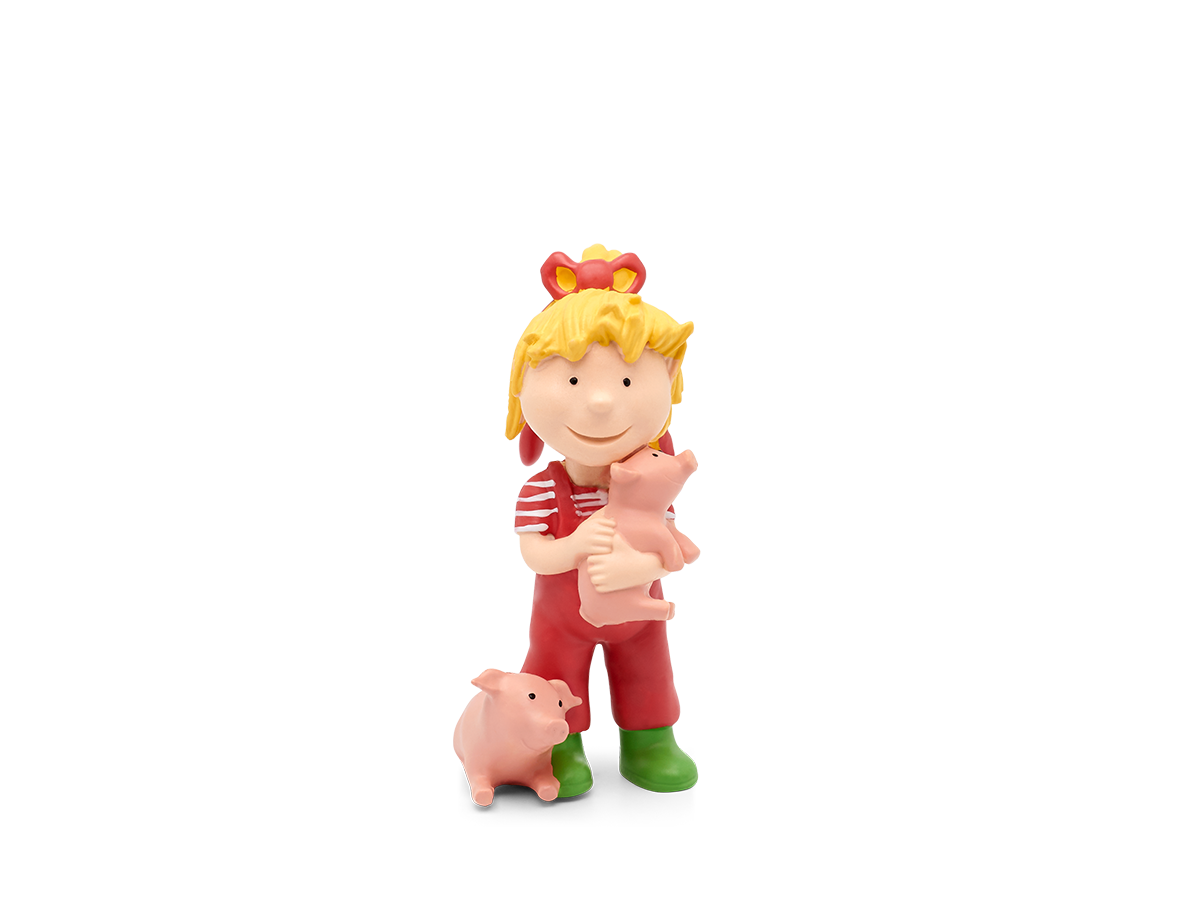
Enter a young girl in a red-and-white striped shirt, sneakers, and a red hair bow. Conni brought zero magical artifacts, zero plasma cannons, and zero centuries-old mythology to the party. Instead, she brought the terrifyingly relatable reality of a normal childhood.
In the grand scheme of system design, this specific release worked like the sturdy stone foundation of a top-tier base build. While other launch figures brought the high-energy hype of fantasy dimensions, this figurine anchored the domestic reality meta. For a three-year-old tiny human, just processing everyday life takes an immense amount of cognitive processing power. While high fantasy fires up the imaginative synapses, it is the hyper-predictable, highly structured modeling of everyday life that brings emotional stabilization. Putting a slice-of-life human character in the launch lineup sent a clear message to parents: this speaker box is not just an occasional toy, it is a core utility for your daily domestic routine.
Side Quest: The Cultural Contract of Mundane Milestones
To see why this specific character completely altered the trajectory of the brand, we have to look at a fascinating cultural split in media design. Think of it like comparing western action RPG design to cozy slice-of-life simulators.
In typical Western kids' media, the narrative engine runs on high-stakes, action-heavy loops. A rescue puppy cannot just sit in a yard; it has to pilot a supersonic jet to save an entire city from immediate doom. A superhero toddler cannot just go to bed; they have to defend a metropolis from colorful villains. This sets up a high-stimulation loop where little brains are trained to crave constant sensory spikes, rapid-fire editing, and breakneck pacing.
European children's media, especially the legendary German tradition of Alltagsgeschichten, runs on a completely different engine. The core philosophy here assumes that the real world is already fascinating, complex, and beautiful to a growing mind. The scripts skip the explosive third-act action sets entirely. Instead, they treat the ordinary tasks of a toddler's week like the ultimate endgame raids.
Here is how the narrative progression maps out in this specific audio workflow:
- Phase 1: External Exploration (The Farm Outing)
- Learning the mechanics of how a real tractor clears a field.
- Processing the sensory details, textures, and smells of a rural barn.
- Phase 2: Internal Transition (The New Sibling)
- Processing the emotional shifts when a new infant joins the home base.
- Decoding the mechanics of a newborn's needs, like where they sleep and why their volume controls are stuck on high.
This narrative framework acts as a massive developmental shortcut. By turning down the background noise of standard cartoons, the audio system slashes cognitive load. It treats the tiny friction points of childhood with absolute dignity. For a three-year-old, visiting a strange farm or watching a parent cradle a new baby is the psychological equivalent of a grueling tabletop boss encounter. The brilliance of this design is that it refuses to hide these events behind loud cartoon gimmicks. It models real coping skills, healthy boundaries, and clear communication in a sandbox environment that kids can control entirely on their own terms.
The Sandbox Expansion for Family Routines: The Pacing Meta
Beyond the media philosophy, this specific release introduced a beautiful acoustic framework that parents quickly figured out: the structural decompression loop. The total runtime of the audio payload clocks in at exactly 43 minutes, and the macro layout of the two included audio plays is a masterclass in winding down a chaotic household.
The first audio block centers on the farm trip. Acoustically, this track is highly active, bright, and texturally rich. It is packed with distinct, high-frequency environmental cues, from roosters crowing and cows mooing to the mechanical low-end rumble of heavy farm equipment. This segment perfectly matches the high-energy afternoon baseline of a typical toddler. It hooks their outward attention, using crisp audio worldbuilding to satisfy their curiosity about the physical world.
But as the track progress bar ticks forward into the second half, the entire acoustic landscape executes a calculated shift. The narrative heads indoors to focus on the arrival of the new baby. The background triggers melt away. The environmental noise drops off, replaced by the soft ambient space of a family room, gentle indoor acoustics, and low-frequency vocal tracks. The voice acting slows down, becoming rhythmic and incredibly intimate.
This progression operates exactly like a biological cool-down routine. Your kid starts the audio session engaged with a busy outdoor world and finishes it sitting quietly in a cozy home setting, listening to a sleeping baby. Parents quickly realized they weren't just buying an isolated story; they were deploying a highly effective sleep-induction script. By popping this figure onto the box during transitional times of the day, families could reliably lower the household energy levels without fighting over screen time.
From a corporate strategy angle, this realization built the modular sandbox blueprint for all future content licensing. The brand proved it did not need to sign multi-million dollar contracts with massive Hollywood animation studios to capture long-term loyalty. They discovered they could scale their character roster indefinitely by simply mapping figures to real-world childhood milestones. The production pipeline became simple, low-risk, and wonderfully repeatable. If a single figurine tracking a farm visit and a baby sibling could win the market, the brand could systematically build variants for every routine milestone on the map, whether it is visiting the dentist, getting a haircut, learning to swim, or starting preschool. It created a foolproof blueprint for infinite expansion, turning the platform into a permanent, screen-free companion for early childhood.
The Exit Interview
- Golden Nugget: Real-world routine modeling scales just as powerfully as high-fantasy licensing. By intentionally mapping audio plays to big developmental transitions, a child-focused platform transforms a simple physical figurine into an essential tool for household peace.
- Rapid Fire FAQ:
- What is the total audio runtime of this specific release? The entire audio payload runs for exactly 43 minutes, split cleanly between two independent childhood narrative plays.
- Why did this character model heavily influence the brand catalog strategy? It proved that toddlers are deeply engaged by quiet, realistic milestones, allowing the brand to build a massive library of routine-based variants without relying on expensive, fast-paced cinematic properties.
- Next Step: Take a good look at your current child's audio shelf. If the collection is heavily over-indexed on high-action movie summaries, introduce a dedicated slice-of-life character to help reset their sensory baseline and establish an intentional wind-down routine during quiet hours.
Disclaimer: Our goal is absolute technical accuracy, but we are human and bugs happen in the code. We never intend to offend, insult, or attack anyone with our content. If you spot a bad data point or a broken fact, please report the post so we can patch it immediately. We are just a three-person squad running this site, managing the daily blog, and prepping the new forums. If you appreciate the grind and want to help us keep the lights on, consider buying us a coffee. It keeps our caffeine levels critical and the servers running.
Reference Log
- Official Tonies Product Page: https://tonies.com/de-de/tonies/conni/conni-auf-dem-bauernhof-conni-und-das-neue-baby/
- Playpolis Toy Database Review: https://www.playpolis.de/tonies/tonie-hoerfigur-conni-conni-auf-dem-bauernhof-conni-und
- Colludo Brand Archive Spec Sheet: https://www.colludo.de/Marken/tonies/tonie-hoerfiguren/tonies-01-0011-conni-conni-auf-dem-bauernhof-conni-und-das-neue-baby.html