
TL;DR (For Parents Living on Critical Hits and Zero Sleep)
Grab your favorite oversized mug and fill it with your preferred source of caffeine, because we need to gab about a major meta shift in the screen-free audio world. The release of Die Olchis werden Fußballmeister (Model number 01-0020) brought native German audio dramas, or Hörspiele, right to the front lines. It proved that kiddos wanted chaotic, episodic storytelling over generic global blockbusters.
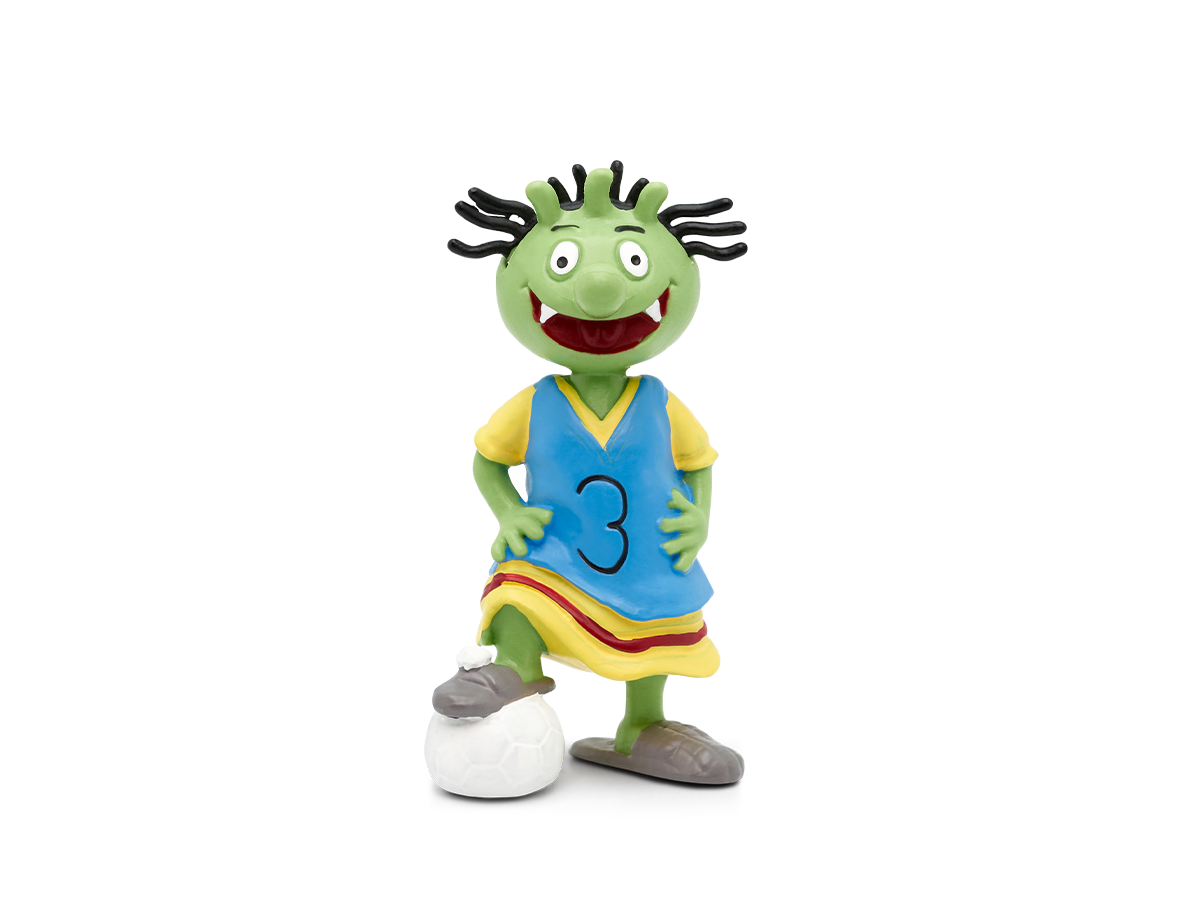
- Physical Spec: This little green guy uses a smart two-point layout. It plants its left slipper and the soccer ball base right onto the speaker pad for extra balance, though you will definitely see some cosmetic scuffs over time.
- Audio Spec: This 32-minute audio play acts as an absolute raid boss for a tiny 3-Watt mono speaker. It requires serious sound mixing wizardry to keep gravelly monster voices from turning into mud and sharp referee whistles from blowing out your eardrums.
The Quest Log
- Main Campaign
- The Smelly Pitch: Breaking down the shift from polished princesses to trash-loving green monsters.
- Side Quest: Dual-Point Stabilization: The engineering behind making an asymmetrical soccer star stay balanced.
- Acoustic Grime: The sound mixing wizardry needed to keep a 3-Watt mono speaker from blowing out.
- Endgame Content
- The Exit Interview: Core takeaways and a rapid-fire FAQ for busy parents.
The Smelly Pitch
Think back to when screen-free audio systems first dropped. The entire market looked like a curated Pinterest board for a Disney princess. Parents were buying beautifully animated stories, gentle bedtime loops, and hyper-polished global brands. Everything was pristine, sparkling, and perfectly polite. It was the reigning meta for kids' toys. Then Erhard Dietl's classic literary world literally gatecrashed the party, shifting the whole strategy toward raw, localized domestic audio dramas. The arrival of these green, trash-loving creatures from the fictional town of Schmuddelfing brought an entirely different energy to the shelf. Think of them like the Murlocs of the children's audio world. This specific release, which translates to The Olchis Become Soccer Champions, proved that the core audience did not just want polite fairy tales. They wanted the chaotic, slime-coated, high-energy storytelling that has been a staple of German childhood libraries for decades. Think of it like dropping a high-level Orc Warrior right into a delicate high-elf tea party.
For a tech ecosystem trying to transform from a passing gimmick into a permanent household fixture, locking down local licensing deals with heavy hitters like Oetinger Media was a massive victory. German kids do not just passively listen to a story once or twice. They hoard massive, serialized collections of audio dramas like a dragon sitting on a mountain of shiny gold coins. We are talking about characters who enthusiastically eat rusty nails, chug moldy lawnmower fuel, and take naps on piles of broken glass. It is a brilliant storytelling tradition that pairs gross-out humor with pure anarchic fun. By moving this sports comedy into the NFC universe, the creators showed that their high-tech audio cube was not just a shiny novelty. It was a rugged repository for genuine literary history. It flipped the script on how parents viewed the whole toy catalog, transforming a collection of simple movie summaries into a sprawling, multi-chapter audio universe.
Plus, watching how toddlers interact with these tactile little storytellers is a fascinating study in focus. When a kid drops this little green monster onto the speaker base, they are not looking for a moral lesson about cleaning their room or saying thank you. They are stepping right onto a chaotic sports field where the rules of reality get wonderfully bent. This narrative style is absolute gold for building long-term auditory focus in tiny humans. A standard musical track might hold a toddler's attention for the length of a single short song, but a full-cast audio play with distinct voice actors, ambient stadium roars, and a running plot is like leveling up their auditory processing stats. It trains them to build incredibly vivid mental imagery purely out of sound, keeping them thoroughly entertained without the help of a glowing tablet screen.
Side Quest: Dual-Point Stabilization
From a mechanical design perspective, casting a bipedal creature with an athletic, asymmetrical pose is like trying to balance a custom D&D miniature on a shaky tabletop. If you look at standard figure layouts, most characters stand perfectly straight with both feet glued symmetrically to a flat circular base. That keeps the internal magnetic anchor centered beautifully right beneath their center of mass. But our green soccer pal here is casually resting his right foot on top of a white soccer ball while balancing all his weight on a single slippered left foot. If you build a figure with that kind of shifting weight distribution without adjusting the physics, you create an unintended lever. A single bump of the play table would pull the internal magnet away from the steel plate inside the speaker box, pausing the audio track and causing an immediate toddler meltdown.
To beat this specific boss fight, the product engineers designed a clever two-point contact footprint. Instead of letting the soccer ball float in mid-air as a cosmetic piece, the mold ensures the very bottom of that white ball sits perfectly flush with the horizontal plane of the left slipper. When you put the figure down, it sets up a highly stable base. Combine that smart geometry with the downward tug of the internal magnet, and you get a brilliant tripod effect, earning a natural 20 on its stability check. It resists tipping amazingly well, surviving the chaotic storm of a toddler's playroom. If you have ever handled tools, built models, or fixed plastic toys, you will immediately appreciate how thick and durable the thermoplastic elastomer material is throughout the legs to prevent them from bowing under pressure.
The only real trade-off for this physical stability is standard cosmetic wear and tear. Because the white soccer ball is painted a bright, light color and rubs directly against the high-friction fabric surface of the player box, it acts as a magnet for dark scuffs. Constantly sliding and dragging the figure around will eventually cause some paint rub on the bottom curve of the ball. Also, those three distinct horns sticking out of the character's head are the primary impact zones. When your kid sends this figure flying off a shelf onto the hardwood floor, those pointed tips take the brunt of the hit. This leads to minor paint chipping, exposing the raw green plastic under the black hair finish. Honestly, for an Olchi character, a few battle scars and a little grime actually match their junkyard aesthetic, but collectors will still want to keep an eye on it.
Acoustic Grime
Step inside a professional recording space like CSC Studio in Hamburg, and you quickly realize that mixing a full-cast audio play for a tiny 3-Watt mono speaker is a serious technical battle. This isn't a collection of smooth, pristine vocal tracks. The characters speak with heavily textured, deep, and beautifully gravelly voices to match their monster identities. In the world of audio engineering, those raspy tones are packed with thick low-mid frequencies and chaotic harmonic distortions. If you just dump a raw studio file onto the cloud and play it through a single-driver toy speaker, the sound waves will bleed together. The low-mid frequencies will bounce around inside the small plastic housing, transforming the dialogue into a muddy, unintelligible soup.
To save the day and keep things perfectly clear, the audio technicians use a clever equalization strategy. They meticulously carve out a dedicated frequency pocket between 1 kHz and 3 kHz, which is the sweet spot where human ears pick up consonant clarity and speech articulation. At the same time, they slap on a steep high-pass filter to drop out the muddy frequencies below 200 Hz that would otherwise choke the small speaker cone. This careful sound editing ensures that the unique, gravelly personalities stay sharp and clean, even when the volume is cranked up to the max in a noisy living room.
The audio challenge doubles when you add the soundscape of a packed sports arena. This 32-minute tale is filled with high-energy soccer match effects, including sudden crowd cheers, synchronized stadium clapping, and sharp, piercing referee whistles. A real whistle blast creates an incredibly loud high-frequency spike that can easily clip small hardware or scare a young listener. To prevent this, the mastering chain uses a fast-acting brickwall limiter. This processing caps the volume peaks of the whistles and roars, clamping down on the dynamic range so everything sits at a safe, uniform listening level. The final mix is a beautifully executed balancing act, managing to simulate a massive, echoing stadium atmosphere while completely protecting little eardrums and stopping the low-power amplifier from entering hardware distortion.
The Exit Interview
Golden Nugget: Localized, delightfully chaotic audio dramas are the perfect tool to build long-term auditory focus in young kids, forcing smart mechanical and acoustic design choices to handle complex multi-cast soundscapes and unique asymmetrical poses.
Rapid Fire FAQ:
- Why does this figure have a dual-point base design? The bottom of the soccer ball and the left slipper sit on the exact same horizontal plane. This creates a stable two-point contact setup, preventing the dynamic athletic pose from making the figure tip over and pause the audio.
- How does the audio mix stay clear on a tiny mono speaker? Studio teams use precise equalization to boost the mid-range clarity of the gravelly voices while using strict brickwall limiters to clamp down on loud volume spikes from stadium cheers and referee whistles.
Next Step: Take a look at your kid's audio shelf. Swap out a standard, slow-paced single-narrator audiobook for a high-energy, multi-cast sports audio play to see how well they track multiple characters and complex background sound effects without a screen guiding them.
Disclaimer: Our goal is absolute technical accuracy, but we are human and bugs happen in the code. We never intend to offend, insult, or attack anyone with our content. If you spot a bad data point or a broken fact, please report the post so we can patch it immediately. We are just a three-person squad running this site, managing the daily blog, and prepping the new forums. If you appreciate the grind and want to help us keep the lights on, consider buying us a coffee. It keeps our caffeine levels critical and the servers running.
Reference Log
- Official Tonies Product Page for Die Olchis werden Fußballmeister
- Kieskemper Shop Retail Details and Technical Specifications
- MediaMarkt Switzerland Audio Product Catalog Entry
- Technical Specifications and Production Notes via Die Wunschkiste
- Otto Retail Database and Run Time Documentation